How to Prevent Basement Mold After Sump Pump Failure
Mitigation Experts Editorial
Written & Researched
Expert Reviewed IICRC
Verified Mitigation Standards
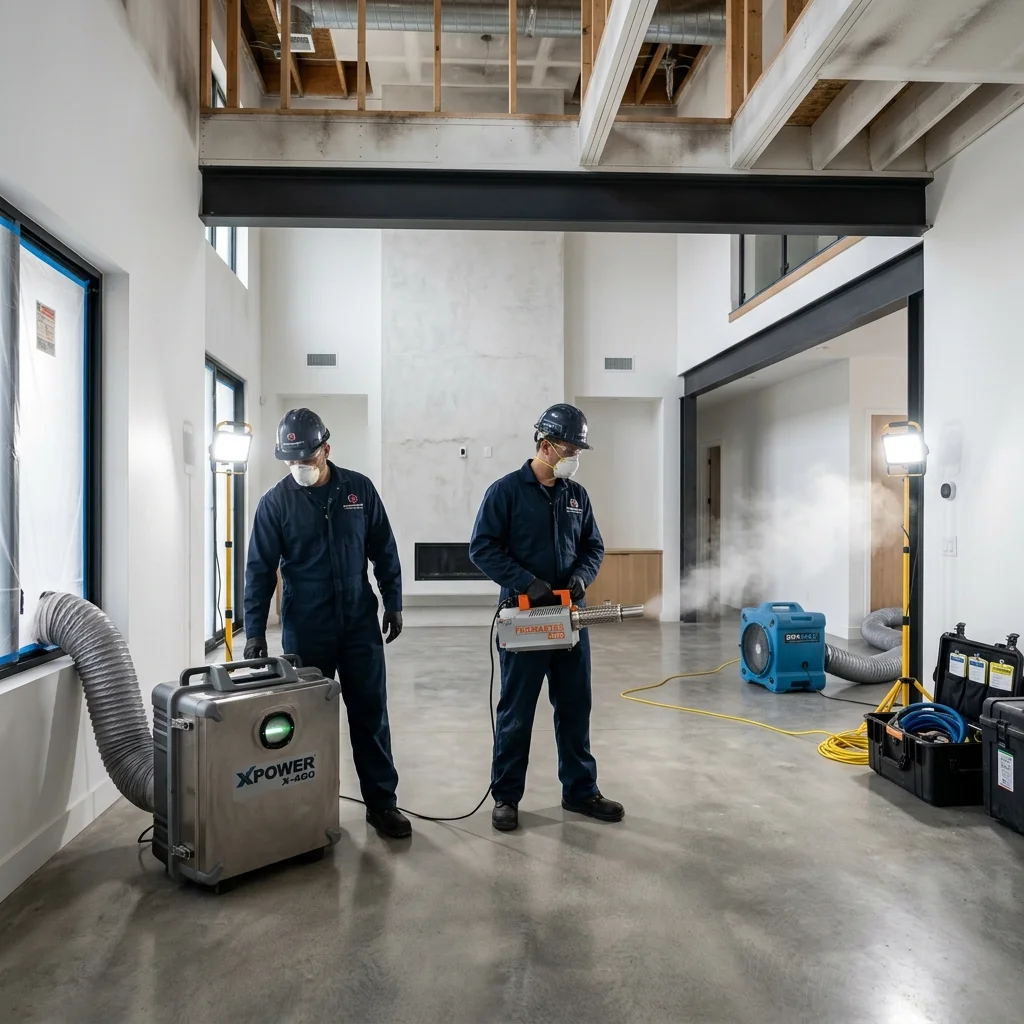
Key Recovery Takeaways
- → Rapid Response: Call certified crews immediately to stop secondary structural timber rot.
- → State-of-the-Art Drying: High-velocity dehumidifiers and air scrubbers protect dry boundaries.
- → Expert Validation: Pinless meters and thermal imagers verify exact dry-out protocols.
A sump pump failure during a heavy storm can dump hundreds of gallons of raw ground water directly into your basement. Since basement walls are typically framed against cold foundation concrete, this high moisture level triggers rapid mold growth within 24 to 48 hours.
1. Fast Ground Water Extraction
Standing water must be extracted immediately using truck-mounted vacuum systems. Leaving ground water standing on concrete slabs allows moisture to wick up drywall and paneling through capillary action, which ruins framing and drywall assemblies.
2. Containment and Decontamination
Ground water is classified as Category 2 (Grey Water) or Category 3 (Black Water) because it contains soil bacteria and chemical runoff. Dispatched recovery crews seal off the basement, apply commercial antimicrobial sanitizers, and wash all hard surfaces before starting the drying process to prevent mold spore propagation.
3. Running LGR Dehumidifiers
Basement environments lack natural ventilation. To achieve structural stability, restoration experts deploy low-grain refrigerant (LGR) dehumidifiers. These advanced machines lower relative humidity below 50%, stopping mold spores from germinating on organic cellulose materials like drywall paper and wood studs.
If your property has experienced a basement flood, refer to our localized directory like Water Damage Restoration in Arizona or book instant Water Damage Restoration services to stabilize your home immediately.
Recommended Recovery Guides
- Next Guide: Structural Mitigation Protocols for Burst Heating Pipes
- Previous Guide: The Science of Psychrometry in Structural Drying