MOLD
REMEDIATION?
Connected to the nation's premier network of certified disaster mitigation teams. Rapid On-Site Dispatch 24/7/365.
Water Damage Restoration Near Me
Property emergencies demand immediate professional action. Click below to connect directly with our local certified dispatch crew instantly.
Tap to Call Central Dispatch Hotline
Certified Mold Spore Mitigation and Air Filtration
Mold is a biological organism that expands rapidly in high-humidity zones. When structural components remain wet for more than 48 hours, microscopic spores germinate. Mold feeds on organic cellulose in drywall, wood framing, and carpet pad, releasing volatile organic compounds (VOCs) and mycotoxins that degrade indoor air quality.
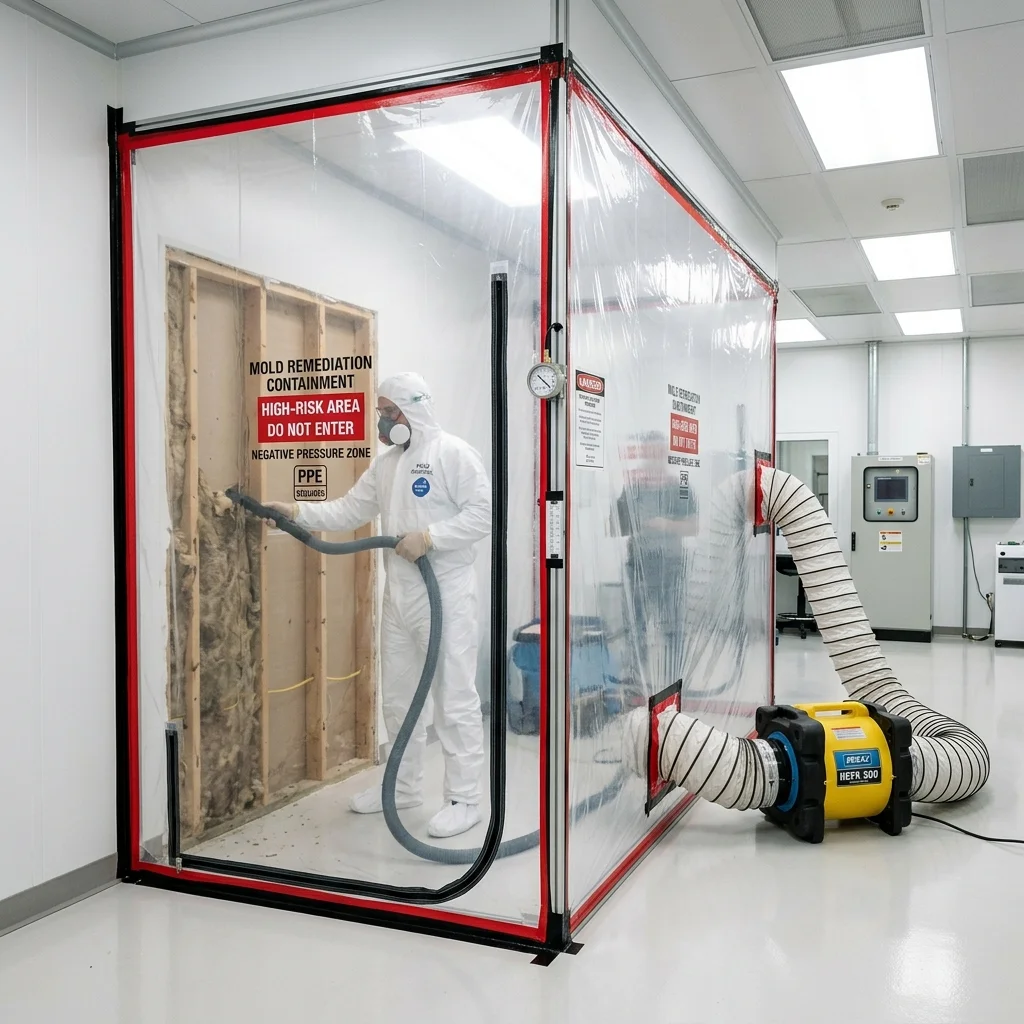
Our dispatch network connects you directly to certified mold remediation professionals. They follow strict safety guidelines, setting up physical containment barriers using commercial plastic sheeting and running HEPA air scrubbers to isolate and capture airborne mold spores.
🔬 Mold Containment Standard:
To prevent cross-contamination to clean areas of your home, dispatched specialists implement professional containments:
- HEPA Air Scrubbing: Continually cleaning the air inside the containment zone.
- Physical Plastic Barriers: Sealing vents, doorways, and cavities with 6-mil plastic.
- Fungal Cleaning: Physically removing mold growth from framing and concrete.
Certified Mitigation Phases
Safely containing mold requires strict regulatory and scientific adherence:
-
🛡️1. Isolation & Containment Establishing negative air pressure zones to keep spores from traveling to unaffected areas.
-
🧹2. Fungal Remediation Carefully removing porous materials and physically sanding structural framing.
-
🧪3. HEPA Vacuuming & Seal Vacuuming surfaces with HEPA vacuums and applying antimicrobial encapsulant sealants.
Technical Stages
-
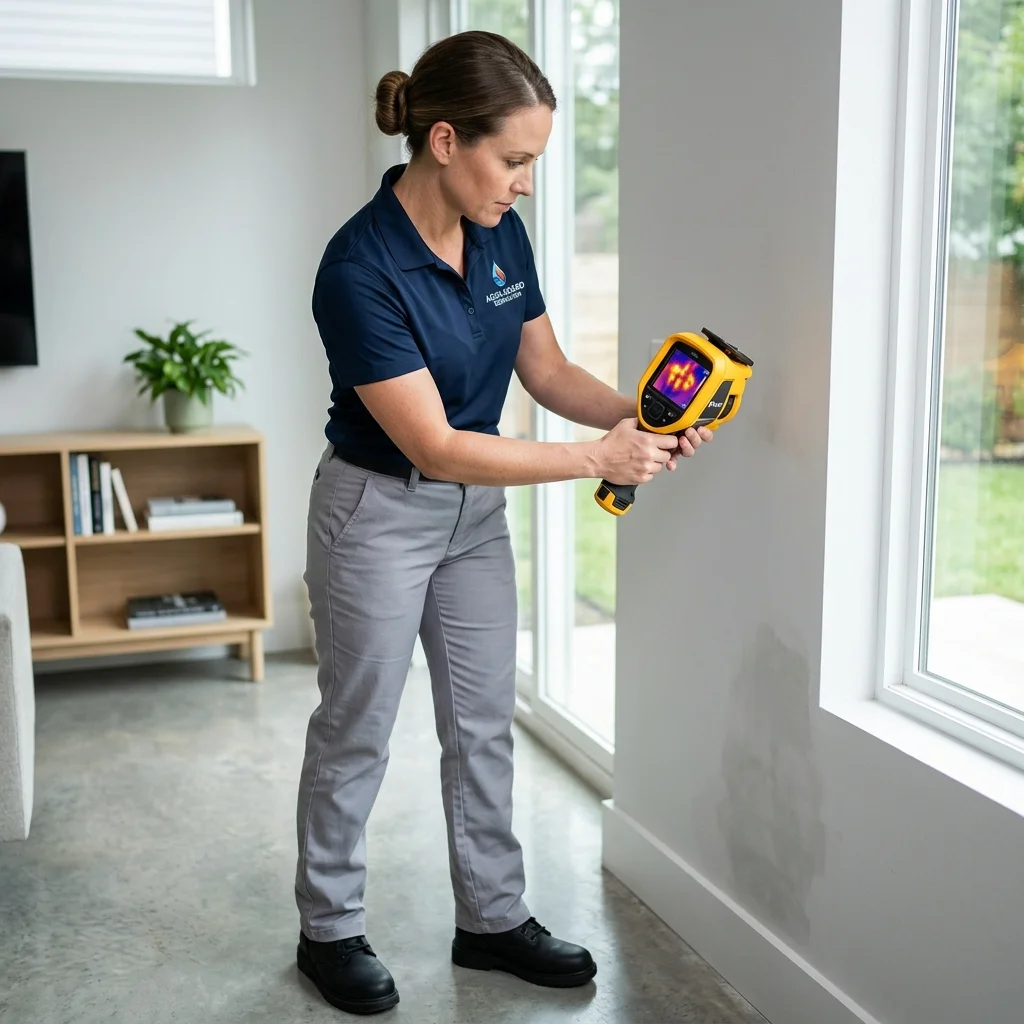
Stage 1: Moisture Detection
Locating and resolving the underlying moisture source (slab leaks, roof leaks) before cleanup begins.
-
Stage 2: Air Scrubbing
Running professional air filtration units to trap spores and restore normal air quality indicators.
-
Stage 3: Clearance Testing
Conducting post-remediation air quality tests to verify that spore levels have dropped below baseline outdoor levels.