5 Immediate Steps to Take During a Water Damage Emergency
Mitigation Experts Editorial
Written & Researched
Expert Reviewed IICRC
Verified Mitigation Standards
Key Recovery Takeaways
- → Rapid Response: Call certified crews immediately to stop secondary structural timber rot.
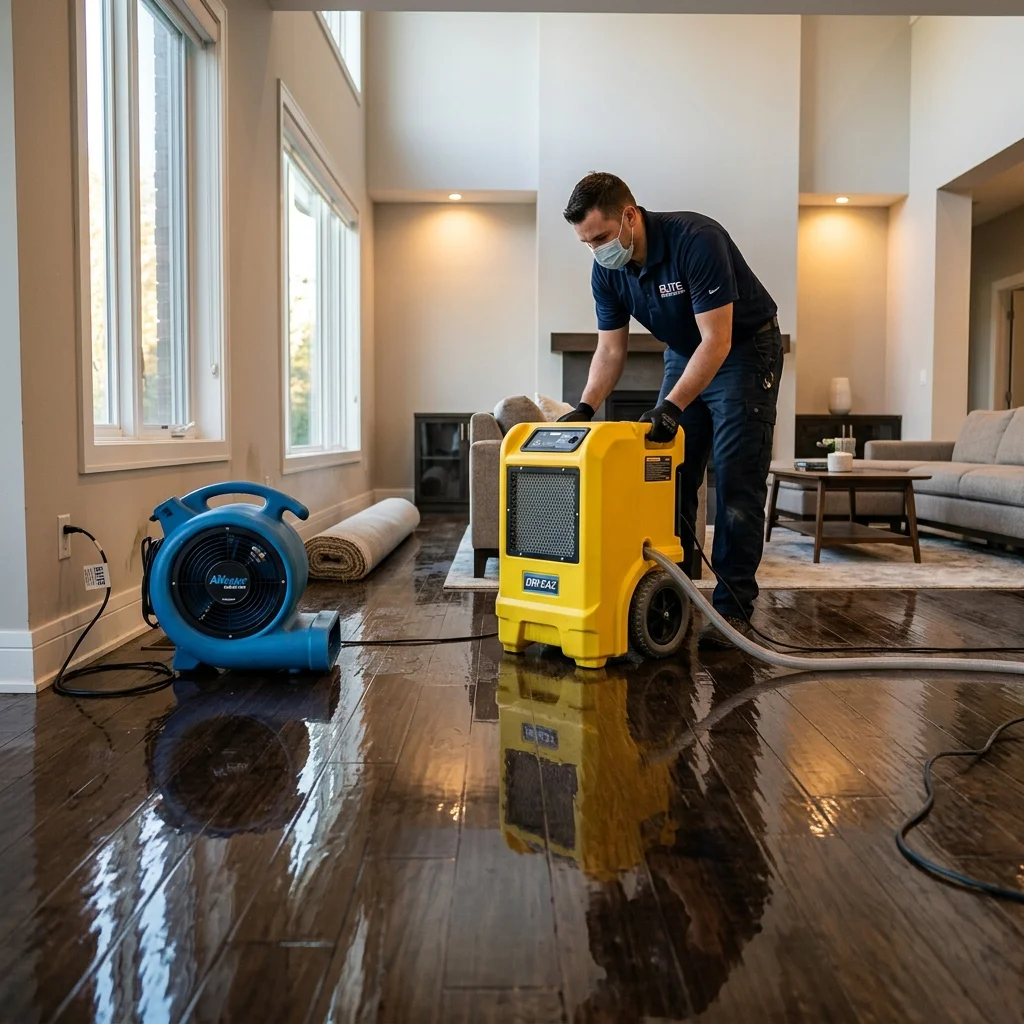
- → State-of-the-Art Drying: High-velocity dehumidifiers and air scrubbers protect dry boundaries.
- → Expert Validation: Pinless meters and thermal imagers verify exact dry-out protocols.
A water damage emergency can be one of the most stressful experiences for a property owner. Whether it’s a burst supply line flooding your basement or a sudden appliance failure, your actions in the first 15 minutes determine whether you'll face a straightforward dry-out or a massive structural reconstruction project.
1. Shut Off the Main Water Valve
The very first thing you must do is stop the active flow of water. Every second water continues to spread is additional damage to your flooring, baseboards, and drywall.
- Where to find it: Usually located near the water meter, in the basement, or in an exterior ground box.
- How to close it: Turn the valve handle clockwise until it stops.
2. Turn Off the Water Heater
If your emergency involves hot water lines or if you have shut off the main water supply, turn off your water heater. If left powered on without active water pressure, the heating elements can burn out or the unit can suffer thermal damage.
3. Clear Standing Water Path
If it is safe to do so, clear furniture and valuables out of the water's path. Lift rugs, draperies, and low-hanging fabrics off the floor to prevent staining and permanent fiber breakdown.
4. Address Electrical Hazards
If water is leaking near electrical outlets, light switches, or your breaker panel, do not touch them. Go to your electrical panel and turn off the power to the affected zones, provided you can do so safely without standing in water.
5. Call a Professional Dispatcher
Once active flow has been shut off, call our 24/7 dispatch line to route the closest emergency structural drying vehicle. Attempting a complex dry-out yourself often traps deep moisture behind walls, leading to rapid mold growth.
Pro Tip: Take clear photos of the standing water and affected items immediately. Having a comprehensive, timestamped visual record is vital for insurance documentation and helps simplify your claim.