The Chemistry of Soot and Smoke Odor Neutralization
Mitigation Experts Editorial
Written & Researched
Expert Reviewed IICRC
Verified Mitigation Standards
Key Recovery Takeaways
- → Rapid Response: Call certified crews immediately to stop secondary structural timber rot.
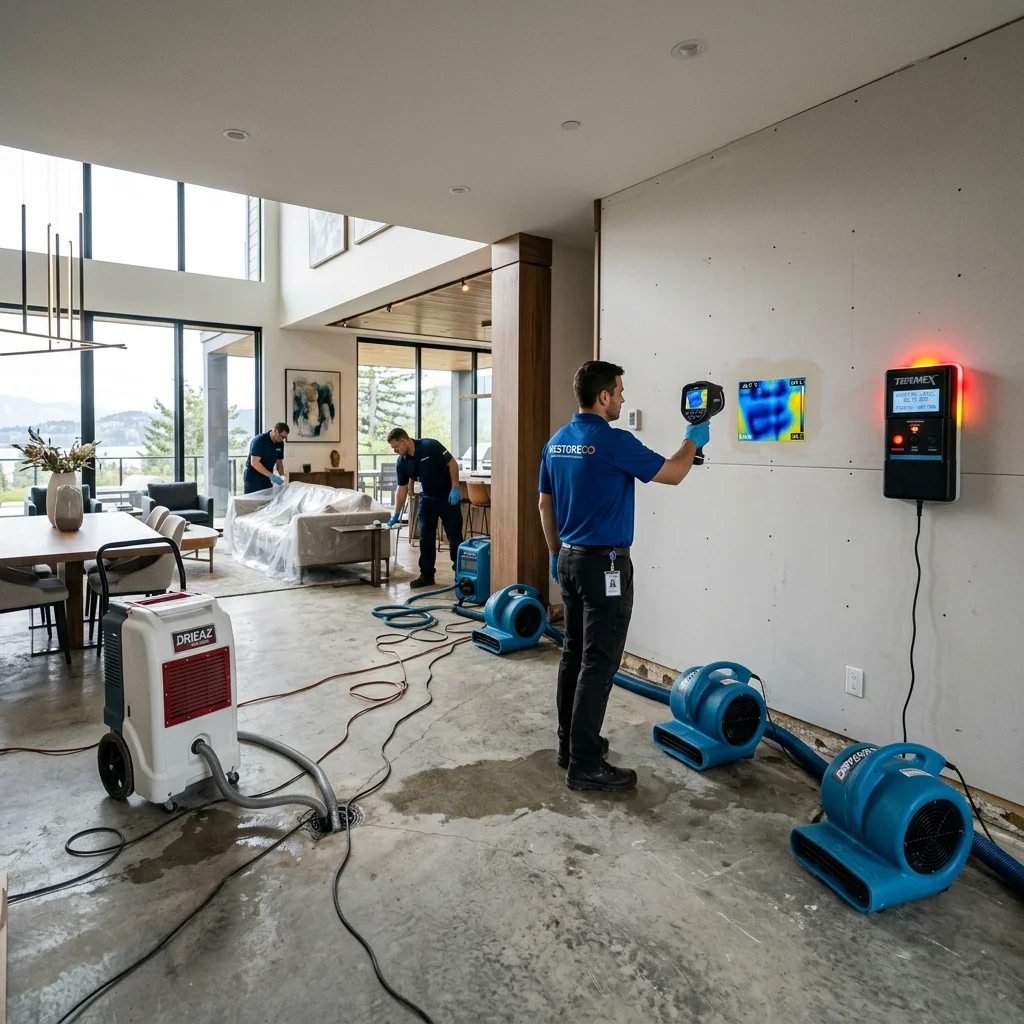
- → State-of-the-Art Drying: High-velocity dehumidifiers and air scrubbers protect dry boundaries.
- → Expert Validation: Pinless meters and thermal imagers verify exact dry-out protocols.
When a fire occurs, the combustion of plastics, synthetic fabrics, and natural wood creates highly acidic soot residues. If left untreated, these particles chemically etch metals, discolor glass, and embed deep toxic odors inside walls.
1. Neutralizing Acidic Soot Etching
Soot particles immediately begin to corrode chrome, brass, and aluminum surfaces. Dispatched fire recovery experts apply targeted alkaline neutralizing washes to arrest this chemical etching process, saving expensive fixtures and appliances.
2. HEPA Soot Particle Scrubbing
Dry soot easily becomes airborne and enters the lungs. Crews deploy commercial HEPA air scrubbers that filter out particles down to 0.3 microns, pulling smoke soot out of the air flow and purifying your building's indoor breathing space.
3. Thermal Fogging and Hydroxyl Odor Removal
To permanently eliminate smoke smells, technicians utilize thermal foggers that emit microscopic neutralizing deodorizers. These droplets penetrate porous materials at the exact same depth as the smoke particles did, chemically neutralizing the odor at its molecular source.
Fire damage requires specialized chemical cleaning. Read our local guides like Water Damage Restoration in Colorado or book expert Fire Damage Restoration services to stabilize your property today.
Recommended Recovery Guides
- Next Guide: Advanced Drying Hardwood Floors and Mitigation Protocols
- Previous Guide: Managing Category 3 Black Water Emergencies Safely